Motivation: The Fuel That Outlasts Hustle Culture
The Thriving Business Ecosystem — Week 6 of 40
More Success with Less Stress
May 2026
Renee was the success story.
If you sat across from her at one of those small business owner roundtables, you would walk away inspired. She had built her boutique marketing agency from a dining-room laptop into a seven-person team in five years. Her revenue chart pointed up and to the right. Her LinkedIn posts about “doing the work” had a small, loyal audience. People used the word “driven” the way you would use a compliment.
What you would not have seen, unless you were standing in her kitchen at 6:14 on a Sunday morning, was Renee with both hands wrapped around a coffee mug she could not quite bring herself to lift, staring at a Sunday-morning to-do list she could not quite bring herself to start.
She did not say it out loud, because successful people don’t. But she had been waking up tired for almost two years. Proposals she used to write in a single energized hour now took three drained ones. She had stopped wanting things she used to want — the next client, the next launch, the next stretch goal. She still showed up. She still delivered. She still crossed things off the list. But somewhere along the way, the engine that had carried her this far had stopped running on what it used to run on — and started running on something else.
When she finally said it to me out loud, she said it almost apologetically. “Steve. I think I’ve been white-knuckling my own business for the last two years, and I don’t actually know what’s underneath my drive anymore. I just know it’s running on fumes.”
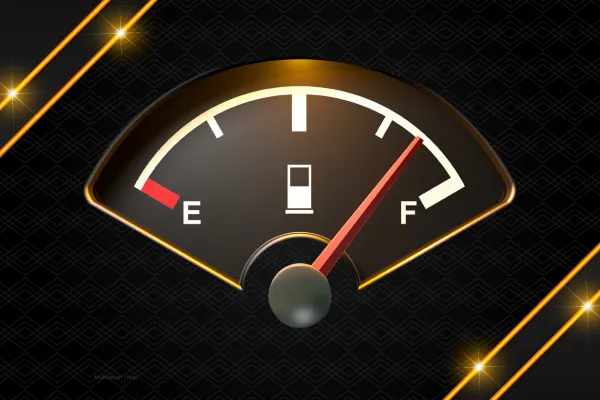
Renee did not have a discipline problem. She did not have a strategy problem. She did not have a mindset problem. Renee had a fuel problem. And her fuel had quietly turned bad.
The Two Tanks Every Entrepreneur Runs On
Last week we sat with self-regulation — the second dimension of the inner operating system, the thermostat that decides what your environment feels like to live in. This week we move to the third dimension, and to a question almost no entrepreneur stops to ask out loud:
What, exactly, is fueling you?
In the emotional intelligence framework, motivation is not a slogan and it is not a tagline on a coffee mug. It is the internal drive that sustains you when the work gets hard, when the path is unclear, and when nobody is clapping. It is the answer to a question that sounds simple but is rarely sat with honestly: when the external rewards thin out, what is still moving you?
Here is what 40 years of working with entrepreneurs has taught me. Almost every owner is running on two different tanks at the same time — and almost none of them have noticed which tank is doing the heavier lifting.
Intrinsic motivation is the tank that fills from the inside. Curiosity. Purpose. The satisfaction of mastering something hard. The quiet alignment of doing work that matches who you actually are. When your intrinsic tank is full, you persist because the work itself matters to you. The fuel renews because you do.
Extrinsic motivation is the tank that fills from the outside. Competition. Recognition. Financial pressure. Fear of falling behind. The need to prove something to someone. Extrinsic fuel is not bad — in fact, in seasons of starting up or scaling, it can produce remarkable acceleration. The problem is that it is volatile. When the external rewards diminish, when the threats fade, when the audience moves on, the fuel level drops with them.
Hustle culture sells you a single idea: that the answer to running on fumes is more grinding. Wake up earlier. Want it more. Want it harder. But you cannot solve a fuel-source problem with a fuel-volume answer. You can only solve it by changing what you are running on.
Why the Wrong Fuel Burns You Down
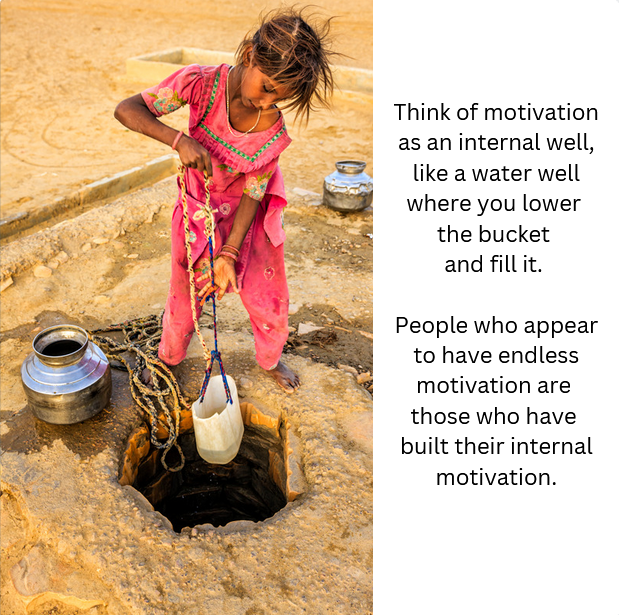
The science here is older than you might think. Self-determination theory — the body of research developed by psychologists Edward Deci and Richard Ryan and now backed by more than four decades of studies across more than a hundred countries — shows the same pattern again and again. Extrinsic-only motivation produces short-term performance and long-term depletion, while intrinsic motivation, anchored in autonomy, competence, and connection, produces both performance and sustainability (Deci & Ryan, 2017).
The data on entrepreneurs is even sharper. A 2024 Harvard Business Review survey of small business owners reported that more than 40 percent described themselves as approaching burnout, and the strongest correlation was not the number of hours they worked. It was the loss of meaning inside the work being done. Other research has placed the rate of clinically significant burnout among entrepreneurs roughly 30 percent higher than among salaried employees in the same industries.
Translation: it is not the volume that breaks entrepreneurs. It is the fuel.
There is a neuroscience layer underneath this too. The brain’s reward system runs on two different signaling patterns. Short-burst dopamine spikes — the kind triggered by a new deal closing, a viral post, or an unexpected check — feel exhilarating, but they fade fast and demand a bigger hit next time. The slower, steadier dopamine release tied to meaningful effort, mastery, and connection produces a quieter satisfaction that compounds over time rather than escalating. Hustle culture trains entrepreneurs to chase the spikes. Sustainable businesses are built on the slow burn.
I think of intrinsic motivation as the deepest part of the root system we have been talking about all phase. Self-awareness lets you see your roots. Self-regulation lets you protect them. Motivation — the right kind of motivation — is what actually pulls nutrients up out of the soil and into the rest of the ecosystem. When the wrong fuel is doing the pulling, the leaves can still look green for a long time. But the tree quietly stops growing.
The Three Engines I See Quietly Running
In the businesses I have walked alongside, I see three distinct motivation patterns running underneath the same word “driven.” Most owners do not realize how different these engines are until they are asked to look at them on paper.
Drive from fear. The entrepreneur propelled by what might happen if they stop. Fear of falling behind. Fear of being exposed as not enough. Fear of going back to where they came from. Fear-driven motion is fast and tireless — until the body, the family, or the team finally taps the brake. The cost shows up as anxiety in the chest, hypervigilance in meetings, and decisions made out of “what will I lose” rather than “what could we build.”
Drive from proving. The entrepreneur propelled by an old audience. A parent who didn’t see them. An ex-boss who underestimated them. A version of themselves at 22 who still narrates their wins. Proving fuel can produce remarkable output for a season — and then the entrepreneur quietly notices that no win lands hard enough to settle the original ache. They cross the finish line, and the ground keeps moving.
Drive from purpose. The entrepreneur propelled by something larger than the next quarter. A specific person their work serves. A specific change their work creates. A specific way their work expresses who they actually are. Purpose-driven motion is sometimes slower than fear-driven motion, but it is unusually durable, and it has a strange property: it tends to refill the very person who pours from it.
None of these are character defects. Most of us have all three running at once — fear in some seasons, proving in others, purpose underneath both when we are at our healthiest. The question is not whether you have all three. The question is which one is doing the heaviest lifting in your tank right now — and whether that is sustainable for the next ten years of the business you are trying to build.
Your Assignment This Week
Motivation is not built in a slogan. It is built in the small, honest practice of looking at what is actually fueling you and choosing the kind of fuel you want more of. Here are four practices to run this week. None of them require a workshop. All of them require honesty.
1. Take the Drive Source inventory. Tonight, write down the three or four things that have driven you most powerfully in the last 12 months. Next to each one, mark it: F for fear, P for proving, or Pu for purpose. Do not edit. Do not improve the answer. Just tell yourself the truth on paper. This single page will tell you which tank has been doing the lifting — and it will probably surprise you.
2. Run the empty-tank test. Pick the moment in the past two weeks when you felt least motivated to keep going. Ask three questions, in this exact order. What had I just lost? What had I just compared myself to? What had I just remembered I wanted? The first answer points to extrinsic depletion. The second points to extrinsic noise. The third — if you can find it — is your intrinsic engine quietly trying to start.
3. Reconnect to a specific human. Most purpose-driven motivation gets dilute and abstract over time. This week, name one specific client, employee, or person whose life is measurably better because of the work you do. Write them a 60-second voice message you do not have to send. Notice what your chest does when you say their name out loud. That is the location of your real fuel.
4. Catch one hustle lie. For the next seven days, every time you hear yourself say “I just need to push harder,” stop. Ask the truer question: push harder toward what — and is it worth what it is costing me? Sometimes the answer will still be yes. The point is that you are answering it consciously instead of running on autopilot. Most burnout in entrepreneurs is not earned in big decisions. It is earned in unanswered ones.
When Renee ran these practices, her first move was not a productivity win. It was a quiet decision to release one client whose work was draining a tank she could no longer afford to drain. The next month, two of her remaining clients upgraded their engagements — not because she had pitched harder, but because the energy in her work had visibly changed. Same hours. Different fuel.
If You Want to Go Deeper
Motivation is one of those dimensions that resists self-diagnosis, because the very story you tell yourself about what drives you is partly written by the fuel you are already running on. The Entrepreneurs Edge™ Ecosystem was built to give you the outside perspective — to show you, with data, what is actually fueling your motion, where it is sustainable, and where it is quietly costing you more than it is producing. If you have been running on fumes and calling it discipline, that is the conversation worth having. Learn more at eqfit.org, or simply reply to this post.
Next week, we will sit with the fourth dimension — empathy — and why your most undervalued competitive advantage is the one that already lives inside you.
Copyright © EQFIT® — Author: Steven Goodner. All rights reserved.