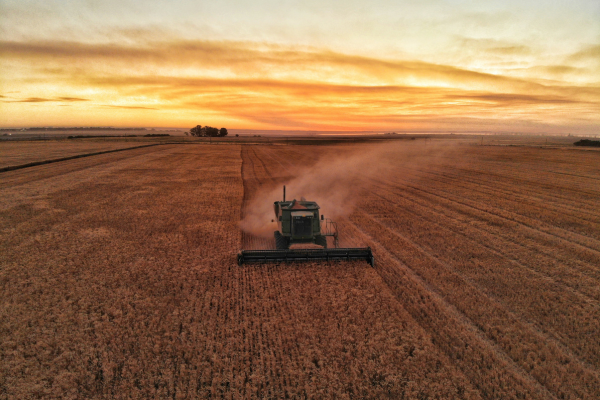
From Hustle to Harvest
EQFIT® Blog Article
The Thriving Business Ecosystem — Week 35 of 40
More Success with Less Stress
From Hustle to Harvest: What a Thriving Ecosystem Actually Produces
Why the Businesses That Flourish Stop Pushing Harder for Results — and Start Growing the Conditions That Produce Them
Author: Steve Goodner
November 23, 2026
The Best Year He’d Ever Hated
Imagine an owner we’ll call Marcus. He has just finished his best year by the numbers, and he can’t understand why he feels like crying.
He builds custom cabinetry — the kind of work where people run a hand along a drawer front and go quiet for a second. For nineteen years he had run his shop on a single conviction: out-work everybody. First truck in the lot, last one out. He answered quotes at midnight, drove two hours to rescue a bad install, took the jobs nobody else would touch. And by every number he knew how to count, it had worked. Revenue was up. The backlog was full. He had just signed the biggest contract in the company’s history.
Picture him sitting across from me one January. I might expect a victory lap. Instead he stares at his coffee for a long moment and says, “Steve, I hit every goal I set this year. And I feel like I’ve been harvesting sand.”
I would ask him what he meant.
“I keep working the way I always have — harder, faster, more. And more keeps coming out the other end. More revenue. More jobs. More everything. But none of it is the thing I actually wanted. I’m more tired than I’ve ever been, my wife says I’m a ghost at dinner, and my best lead man just gave his notice. I did everything right. So where’s the payoff?”
Here is what I would tell Marcus, and it is the whole point of this post. He had spent nineteen years mastering hustle — but hustle on its own can produce more hustle rather than the harvest he wants.
The Insight: Hustle and Harvest Are Not the Same Thing
For thirty-four weeks, we have been tending a living thing. We started underground, with the root system — your inner operating system, the emotional intelligence that every decision quietly grows out of. We moved up into the soil — the trust, culture, and relationships your people are rooted in. We built the growth engine — the sales and systems that reach for the light. And for the last stretch we worked on climate control — the technology and AI reshaping the weather around all of it, whether you invited it or not.
Now we arrive at the season this whole series has been pointing toward. The fruit.
A thriving ecosystem produces fruit. Not because anyone stood over it and forced it to — but because that is simply what a healthy living system does. And this is exactly where so many good, hardworking owners like Marcus get quietly stuck: they confuse the hustle that comes before a harvest with the harvest itself.
Hustle is effort you push into the system. Harvest is the yield the system gives back. They feel related — and in a healthy business they genuinely are — but they are not the same thing, and you cannot swap one for the other. A farmer who has fallen behind in the season does not fix it by going out at night and pulling on the cornstalks to make them taller. Pulling is motion. It even feels like progress; your hands are busy and your body is tired. But corn does not grow from being pulled. It grows from soil, roots, water, and sun — from the whole system being well. The farmer’s job is to tend those conditions. The growing is the plant’s job.

It is easy to get trained to pull. In the early days, when it was just you and a truck, hustle may have felt like the whole system — your effort carrying everything forward. That lesson gets burned in deep, and it is a hard one to unlearn, because it may have served you for a while. But if your business has grown bigger than your two hands, the old reflex can turn from your greatest strength into the thing keeping your fruit small.
The Cost of Pulling
If you have ever felt like Marcus, this may sound familiar: working long hours, skipping vacations, missing dinners, and telling yourself the payoff is coming if you can just push a little harder through this one stretch. But the stretch can keep going when pushing harder is the only response. It may be time to ask whether the work is building the conditions for the harvest you actually want.
There is research worth considering here. A 2021 meta-analysis published in the Strategic Entrepreneurship Journal found that emotional intelligence was more strongly associated with entrepreneurial success overall than general mental ability. Both were associated with success (Allen et al., 2021). That is an association, not proof that emotional intelligence causes success or guarantees a business will flourish. For me, the practical reminder is simple: don’t neglect your inner operating system or the way you connect with people while you work on the numbers. That fits the picture we have been building: tend the ecosystem, not just the effort you pour into it.
Three Fruits You Can Actually Taste
So what does a thriving ecosystem actually produce? When every layer is finally working together — roots, soil, growth engine, and climate — the fruit shows up in three forms you can feel.
Results that run without you. The aim is revenue and growth that do not depend on you white-knuckling every deal — a growth engine built to run rather than to be dragged. This is the difference between a business that makes money and a business that makes money only because of you — and the second kind is not an asset, it is a very demanding job you cannot quit.
Freedom you can actually use. Picture a system that can breathe without you holding your breath for it. The goal is room to take the two weeks, coach your lead man instead of rescuing his install, and think a quarter ahead instead of firefighting the afternoon. That capacity is not a luxury you earn someday after the grind pays off — it is fruit a well-tended ecosystem grows on its own.
Impact that outlasts the day’s to-do list. You want your people to grow, your clients to want to stay and tell their friends, and the work to mean something to the person doing it, including you. This is the fruit Marcus most wanted and could least measure — and it was the first to wither when all he knew how to do was pull.
The Picture on the Lid
Early in this series I described your business as a puzzle box. You can see some of your pieces. Some you cannot. And the real question is not how many pieces you have — it is how they fit the bigger picture on the lid. Some of your pieces have already come together and work well as a team. Some are still working on their own. And a few, if we are honest, are working against each other. A thriving ecosystem is what happens when those pieces — your wiring and drivers, your people, your systems, your tools — stop sitting as a loose pile and start working as one connected system that reinforces itself.
That connected picture has a name in our work: Your Success Ecosystem™. And the fruit of it is the promise this series has carried for thirty-five weeks now — more success with less stress. Notice it is not more success and more stress. The less-stress half is not a bonus tacked onto the end. It is part of what we are working toward. A harvest that costs you your health, your marriage, and your best people is not a harvest. It is just a more expensive kind of pulling.
The Application: Bring In This Week’s Harvest
You cannot force fruit. But you can learn to tell the difference between pulling and tending — and you can start tending the layer that has been starved while you were grinding on output. Here is where to begin this week.
Run a quick harvest audit. Take three sheets of paper, or three columns, and label them Results, Freedom, and Impact. Under each, honestly write down what your business is producing right now — not what you are pouring in, but what is actually coming out the other end. Where is the fruit full, and where is it thin? You may find one basket overflowing and another nearly bare. That gap can be a useful place to start.
Trace the thin fruit back to its layer. Here is the move that changes everything: when a fruit is thin, do not push harder on the fruit. Tend the layer underneath it. Thin results invite a look at the growth engine and the climate — your sales system and your tools. Thin freedom invites a look at soil and systems — what work is still trapped in your head, and what support could carry it? Thin impact invites a look at the roots and the soil — your own operating system and the culture around you. In Marcus’s story, one place to look at both freedom and impact is the same: he had built a company that could only ever run on him.
Catch yourself pulling. For one week, simply notice when an effort is hustle — forcing an outcome that a healthy system should produce on its own — versus cultivation, improving the conditions so the outcome grows. Driving two hours to rescue a bad install is pulling. Building a checklist to help prevent the same problem is tending. You will need both at times, but if your whole week is pulling, your ecosystem has no room left to produce.
Then sit with two questions. First: if I stopped hustling for two full weeks, what would my business produce on its own? Your honest answer is one useful check on your ecosystem’s health. Second: which layer have I been neglecting while I grind on output — and what is one small thing I could do this week to tend it, instead of pushing harder on the fruit?
You have worked hard enough; nobody needs to tell you to try harder. The invitation now is different. It is to become the kind of owner — and build the kind of business — that finally gives something back.
Going Deeper
If Marcus’s “harvesting sand” lands a little too close to home, take heart — it can be a hopeful question to explore, because the next step may not be more effort. It may be a clearer picture of the system you are actually tending. That is the whole EQFIT® approach: Assess → Equip → Align → Succeed. You cannot bring in a harvest from an ecosystem you have never honestly looked at, so it all starts with the Assess. The free Ecosystem Self-Audit and the Success Pathway Snapshot at eqfit.org give you a no-pressure first look at where your fruit is full, where it is thin, and which layer is quietly asking for your attention.
Next week we start naming the fruit, one kind at a time. In “Client Retention: The Fruit That Keeps the Tree Alive,” we will look at why keeping a good client matters — and how the way you serve people can give them reasons to stay.
© 2026 — EQFIT® — All rights reserved.