
The Root Beneath Every Great Decision
Self-Awareness:
The Root Beneath Every Great Decision
EQFIT® Blog Article
The Thriving Business Ecosystem — Week 4 of 40
More Success with Less Stress
Author: Steve Goodner
Marcus had the same conversation with three different business coaches, two years apart.
Each time, the complaint was nearly identical. “My team won’t step up. I’m doing everything myself. Every time I try to delegate, I end up redoing it anyway. I just can’t find people who can perform at the level I need.”
Each time, the coach asked thoughtful questions. Each time, Marcus walked away with a new framework, a new delegation system, a new hiring profile, a new plan. And each time, six months later, he was back in the same place — frustrated, overloaded, and quietly convinced the problem was the market, his people, or the impossible standards of running a small business in 2026.
When he finally sat across from me, he was exhausted in a way that had stopped being about sleep. His shoulders carried the weight of a man who had tried every outside answer to what turned out to be an inside problem.
I asked him a different question. “Marcus, when your assistant sends you a draft that’s 85 percent of what you asked for — what happens inside you in the thirty seconds after you open the file?”
He paused. He actually paused. And something flickered behind his eyes.
“Honestly?” he said. “A kind of sinking feeling. Like, here we go again. I’ll have to fix it.”
“And what do you usually do next?”
“I rewrite the whole thing. And I send it back with a note saying it was ‘mostly there, just tightening it up.’”
He sat with that for a long moment.
“Oh,” he said quietly. “Oh no.”
For two years, Marcus had been solving a delegation problem. In that thirty-second pause, he discovered he had actually been running a self-awareness problem the whole time.
The Cornerstone You Can’t Build Over
Last week, we walked through the five dimensions of the inner operating system that runs every business: self-awareness, self-regulation, motivation, empathy, and social skills. This week, I want to sit with the first one — because self-awareness isn’t just one of the five. It’s the cornerstone the other four are built on.
You cannot regulate emotions you don’t recognize.
You cannot sustain motivation you don’t understand.
You cannot empathize with others from a place of blindness about yourself.
You cannot build trust when you’re unaware of what you’re bringing into the room.
Self-awareness is the root beneath every great business decision — and the missing root beneath most of the painful ones. It is also the single most over-claimed and under-developed capacity in the entire entrepreneurial world.

The 95 / 15 Problem
Ask any entrepreneur whether they’re self-aware, and almost all of them will say yes. Research says they’re almost certainly wrong.
Organizational psychologist Dr. Tasha Eurich has spent years measuring this, and her findings are sobering. Across thousands of participants, 95 percent of people believe they are self-aware. Only about 10 to 15 percent actually meet the criteria for genuine self-awareness when measured objectively (Eurich, 2017; building on Kruger & Dunning, 1999). That means roughly eight or nine of every ten business owners are leading their companies from a confident misunderstanding of themselves.
And it costs them. A 2024 study of small and mid-sized business managers published in Cogent Business & Management found that self-awareness consistently predicted better decision-making, more effective communication, stronger team coordination, and higher overall job performance. Work by Organizational Talent Consulting (2025) linked leadership self-awareness directly to financial performance. When the person at the top can see themselves clearly, the entire ecosystem performs better. When they can’t, the entire ecosystem slowly pays the price — often through turnover, stalled growth, and the quiet exhaustion of the owner.
What Self-Awareness Actually Is
Let’s push past the buzzword. In plain neuroscience terms, self-awareness is the capacity to notice your own emotional, cognitive, and behavioral patterns as they are happening — not two days later in the shower, and not six months later in a coaching session. It is the dashboard of your inner operating system, and the light you finally catch before the engine gives out.
In a business, self-awareness shows up in four very specific places:
Recognizing your emotional state in real time. Are you making this decision from clarity, or from anxiety dressed up as clarity? Is your enthusiasm for this opportunity genuine, or a reaction to fear of missing out? Is your skepticism about the new hire based on evidence, or on discomfort with someone who thinks differently than you? Self-awareness means knowing the honest answer before you act.
Seeing your pattern under pressure. Every one of us has a default when the stakes climb. Some of us take over. Some withdraw. Some talk more; some go quiet. Some get sharp; some get agreeable in the moment and resentful later. The specific pattern isn’t the problem — running the pattern without seeing it is. Marcus’s pattern was rescue and resent. He couldn’t stop doing it because he couldn’t see himself doing it.
Knowing the gap between intention and impact. You may intend to be supportive and land as overbearing. You may intend to be efficient and land as dismissive. You may intend to be clear and land as cold. Self-aware entrepreneurs get curious about those gaps instead of defensive about them. That curiosity is what makes them coachable — and coachable entrepreneurs outpace merely smart ones every time.
Holding the humility that you have blind spots. True self-awareness includes awareness of the limits of your self-awareness. You know there are things about yourself you cannot easily see. You actively seek feedback, assessment, and outside perspective — not because you’re insecure, but because you’re honest about the architecture of being human.
Why Introspection Alone Won’t Get You There
Here’s what most entrepreneurs miss: self-reflection is not the same as self-awareness.
You can journal for thirty years and still carry the same blind spot into every meeting. You can meditate daily and still misread your own impact on your team. Eurich’s research actually found that people who introspected the most were often less self-aware than their peers — because introspection, done in isolation, tends to confirm the story we are already telling ourselves. The reflective mind is a remarkable instrument, but it is also remarkably good at protecting us from what we aren’t ready to see.
This is exactly what I mean when I talk about the puzzle box. You cannot read the label from inside the jar. You cannot see the picture on the lid of the box you are sitting inside. The parts of you that shape your business most powerfully are, almost by definition, the parts you cannot easily see on your own.
Which is why growing self-awareness requires three mirrors — not one.
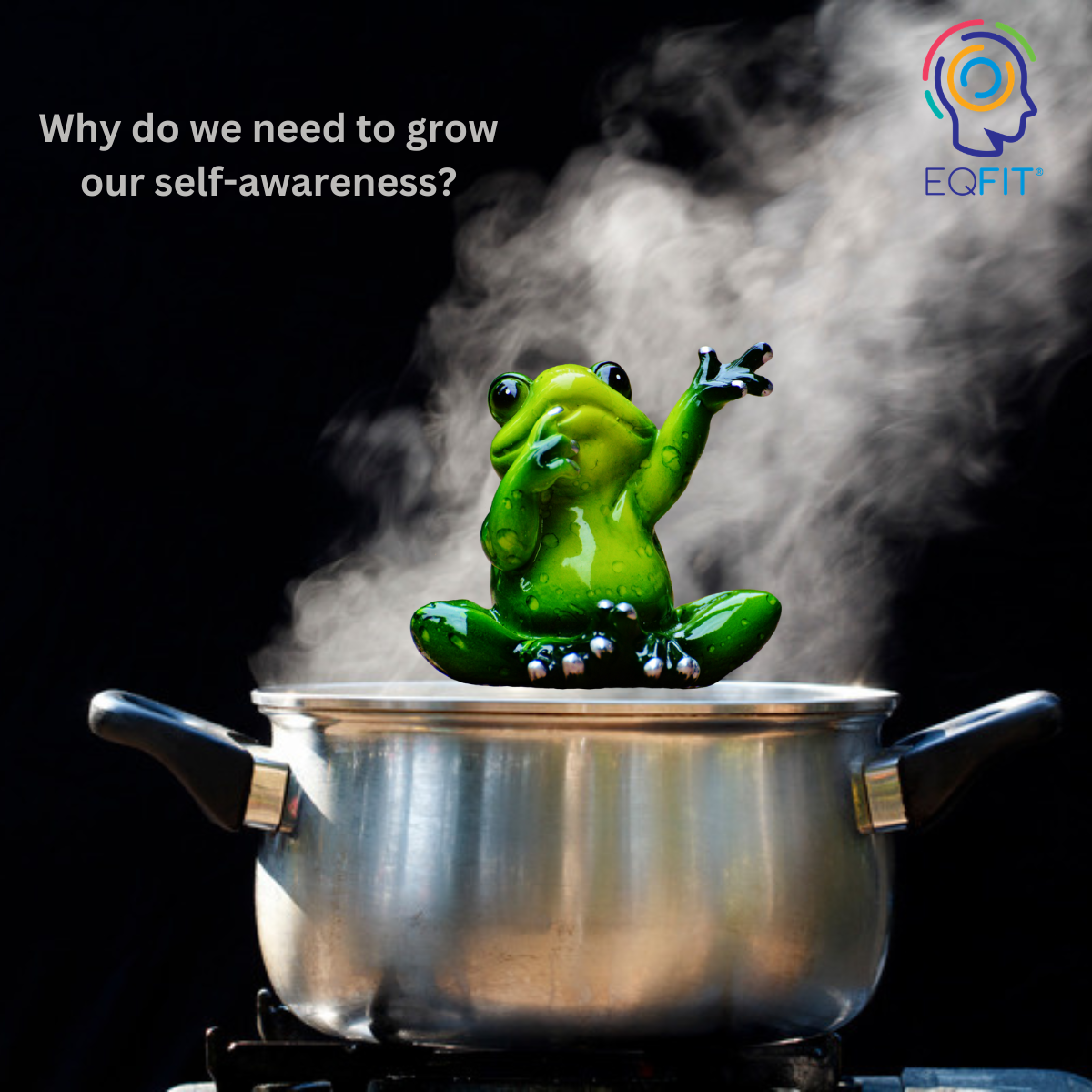
The Three Mirrors of Self-Awareness
The Inner Mirror. Your own reflection. Your own notebook. Your own noticing. This is essential, but it is the smallest of the three mirrors, because it can only show you what you are already willing to see. Don’t skip it — but don’t stop here.
The Relational Mirror. What trusted people reflect back when you ask them honestly. Your spouse, your team, your longest-tenured clients, a coach, a peer who has permission to tell you the truth. Their view of you is not identical to your view of you, and the gap between them is where most of your growth is quietly hiding.
The Assessment Mirror. Structured, objective, research-based instruments that measure how you actually process emotions, respond under stress, connect with others, and make decisions. Multi-dimensional assessment reveals patterns introspection cannot reach — because it draws on decades of science and the comparative data of thousands of other people’s wiring. It doesn’t replace the first two mirrors. It completes them.
When a business owner uses only the first mirror, they usually confirm the story they already believe about themselves. When they use all three, something else happens: their story starts to match reality — and their business starts to match their potential.
Your Assignment This Week
Self-awareness isn’t built on a weekend retreat. It is built in small, steady acts of honesty — the kind you can do this week without rearranging your calendar. Try these four.
1. Run the “85 Percent Test.” Find one thing this week that came to you 85 percent of the way there — a draft from a team member, a proposal from a contractor, a room tidied by a family member, a summary from an AI tool. Before you act, pause and ask: what is happening in my body right now? What is the first thought through my head? Write the answer in twelve words or fewer. You aren’t trying to fix anything. You are practicing catching yourself in the act of being yourself.
2. Find one intention-versus-impact gap. Think of one relationship in your business that feels a little off — a team member who has gone quiet, a client who has cooled, a vendor who stopped returning calls the way they used to. Ask yourself: what was I intending in that relationship, and what might they have actually experienced? Resist the pull to be right. Sit with the possibility that a gap exists. The sitting is the work.
3. Ask three trusted people one brave question. Pick three people who have seen you over the last year — a spouse, a friend, a team member, a client, a peer. Ask each of them, “When you think about me under pressure, what is a pattern you see that I might not?” Don’t explain. Don’t defend. Write down what they say, thank them sincerely, and sit with it for forty-eight hours before responding to any of it.
4. Track your body for five days. Your body knows what you are feeling before your mind does. Set a phone alarm for three random times each day. When it goes off, pause and notice — where is there tension, where is there ease, what emotion is riding underneath? No judgment. No fixing. Just a five-day notebook log of what is living beneath the surface of your workday.
If something uncomfortable surfaces in any of these exercises, that is not a malfunction — that is the dashboard lighting up. The patterns that run our businesses most powerfully are the patterns running underneath our awareness. The moment you see one of them clearly, it loses a little of its grip on you. That is not a hack or a hustle. That is neuroscience, and it is how every real transformation starts.
Marcus’s quiet “oh no” in my office that morning was the turning point of his entire year. Nothing about his business model had changed. Nothing about his team had changed. Something inside him had — because for the first time, he could see it. Within ninety days, he was delegating in a way that actually stuck. Within six months, he had promoted a team member he had almost let go. The mirror did what no new framework ever could.
If You Want to Go Deeper
Building self-awareness with only the inner mirror is slow. Building it with all three mirrors is fast — and that is exactly what the Entrepreneurs Edge™ Ecosystem was built to do.
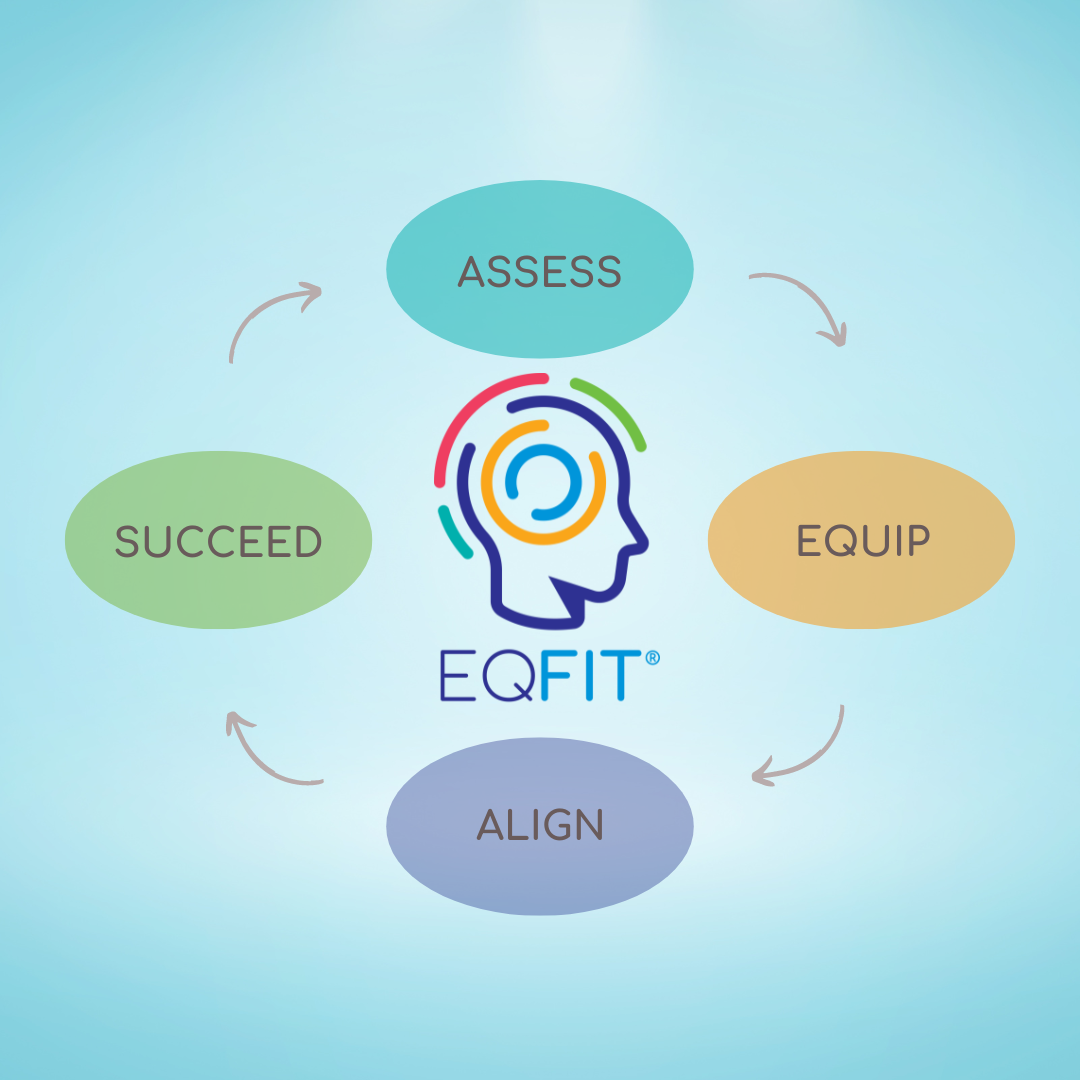
Inside the Ecosystem, we combine multi-dimensional assessments — emotional intelligence, behavioral style, motivational drivers, conflict response, and habit patterns — into one integrated EQFIT® Habit Profile™: a clear picture of how you actually operate, including the patterns you cannot see from inside the box. Paired with personal coaching, it turns “I think I might have a blind spot” into “now I can see it, work with it, and lead from it.” Assess, Equip, Align, Succeed — that is the rhythm the whole Ecosystem runs on, and self-awareness is where it all begins. Learn more at eqfit.org.
Next week, we will sit with the second dimension — self-regulation — and why, when the thermostat inside you breaks, everything around you starts to overheat.
Copyright © EQFIT® — Author: Steven Goodner. All rights reserved.