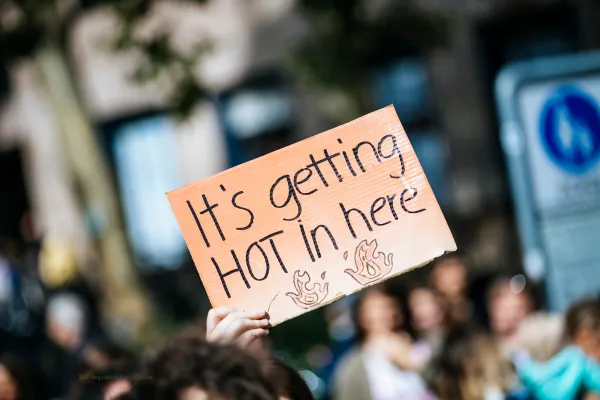
Self-Regulation: What’s the Temperature?
The Thriving Business Ecosystem — Week 5 of 40
More Success with Less Stress
Author: Steve Goodner
Daniel didn’t think he had a self-regulation problem. He thought he had a team problem.
It was a Tuesday morning leadership meeting, the kind that used to be his favorite hour of the week. His ops manager, Priya, opened with one sentence she had clearly rehearsed in the parking lot. “Daniel, we’re not going to make the May install date for the Henderson account.”
He didn’t yell. He almost never yelled. That was part of the problem — he had convinced himself, for years, that he was a calm leader because he didn’t raise his voice. What he actually did was subtler, and far more corrosive. His jaw set. He leaned back. He let out a slow, audible breath through his nose. Then his voice dropped half an octave and went very, very flat. “Okay. Walk me through how we got here. Step by step.”
The room read it instantly. Priya’s shoulders rose. The CFO suddenly became fascinated with the rim of his coffee cup. The newest hire, who had been about to share a creative workaround, decided in real time that today was not the day. The next forty minutes weren’t a problem-solving meeting; they were a polite, careful presentation of evidence aimed at not getting Daniel’s lid to lift further. He never even noticed his lid was up.
When he sat across from me a week later, what he said out loud was, “My team won’t bring me bad news fast enough. By the time it gets to me, it’s a fire.”
I asked him a different question. “Daniel, when Priya said the words ‘we’re not going to make the date’ — what happened in your chest?”
He looked surprised. He thought about it. “Honestly? Heat. Right behind my sternum. Like an instant flare.”
“And what did you do with the heat?”
He gave a small, dry laugh. “I didn’t do anything with it. I just… ran the meeting through it.”
There it was. Daniel didn’t have a team problem. Daniel had a thermostat problem. And his whole ecosystem had been quietly adjusting to the temperature he didn’t know he was setting.
The Pause Most Entrepreneurs Skip
Last week we sat with self-awareness — the cornerstone of the inner operating system, the root beneath every great decision. This week we move to the second dimension, and to a capacity that depends entirely on the first one. You cannot regulate what you cannot see. But once you can see it, the question becomes: what do you do with it in the half-second after you see it?
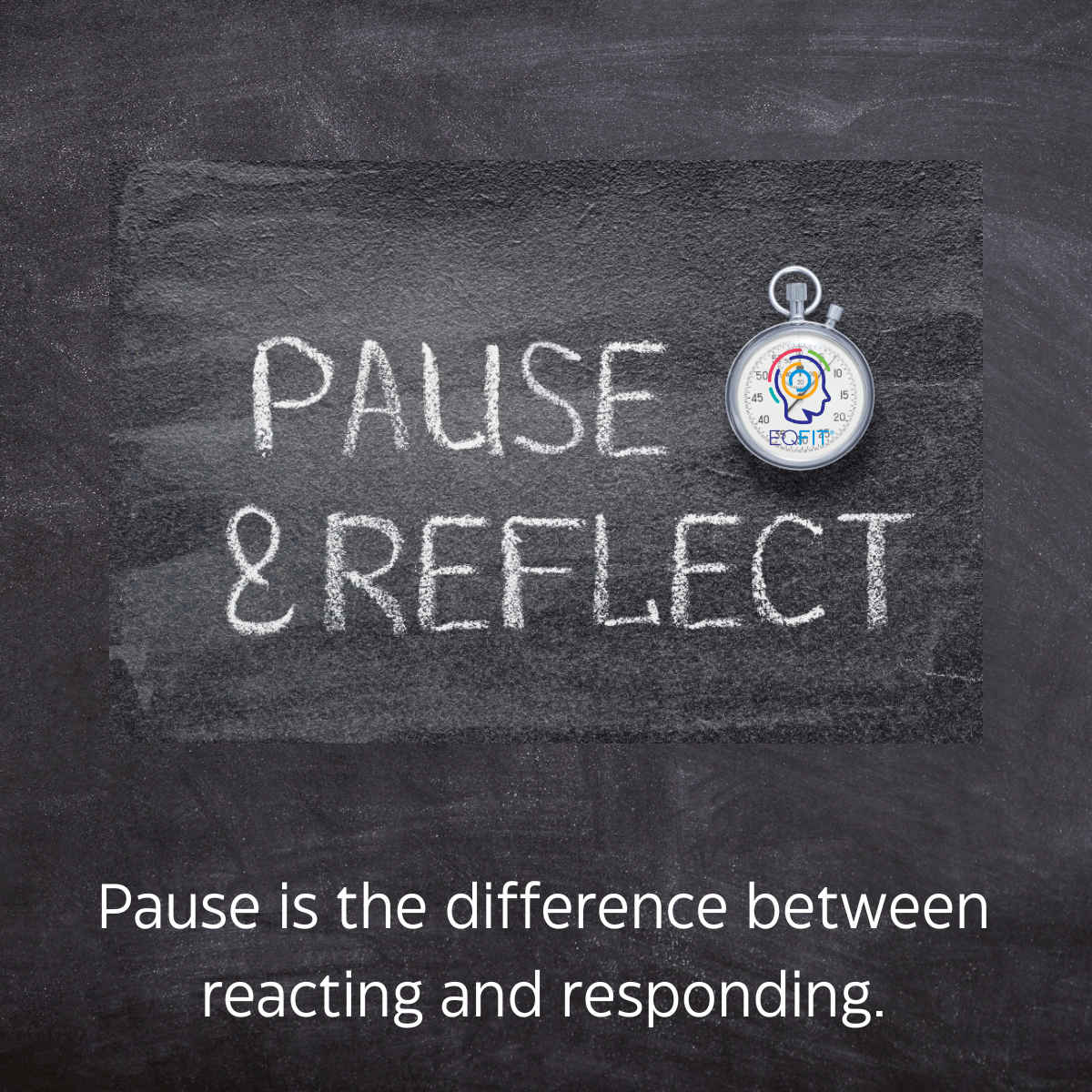
That half-second is self-regulation.
Self-regulation is the pause between stimulus and response. It is the capacity to feel an emotion fully — frustration, anxiety, urgency, disappointment, even excitement — without that emotion driving the next thing that comes out of your mouth, your inbox, or your calendar. It is not the absence of emotion. It is the conscious presence of it.
Most entrepreneurs misunderstand this. They think a regulated leader is the one who never gets angry, never gets nervous, never gets defensive. That isn’t regulation. That’s suppression — and suppressed emotion never disappears. It leaks. It leaks into your tone, your micro-expressions, your decisions about who got passed over for that promotion, your sudden cold streak with the vendor who once disappointed you. Suppressed emotion runs your business in the dark.
True self-regulation does the opposite of suppression. It makes the emotion conscious so you are no longer being run by it. The frustration is still there. The fear is still there. The urgency is still there. But you, not they, are at the wheel.
Why a Broken Thermostat Costs So Much
The metaphor I keep coming back to with my clients is the thermostat. A thermostat does two things: it senses the temperature of the room, and it regulates that temperature toward a set point. Self-regulation works the same way. The leader senses the emotional temperature inside themselves, and they bring it back to a set point that allows them to think, listen, decide, and lead.
When the thermostat breaks, two things happen at once. First, the leader stops sensing their own temperature accurately. Second, they stop regulating it back toward the middle. The room now responds to whatever heat the leader is putting out. And in a small business, the leader is the room.
The cost is rarely a single explosion. It is the slow, almost invisible reshaping of the ecosystem around the leader’s un-named emotion. People stop bringing bad news early. Honest feedback dries up. Creative ideas get pre-edited before they ever get spoken aloud. Talented team members start polishing their resumes — and they don’t tell you why they’re leaving when they go. Customers feel the static even on a video call. Partners get more cautious. The ecosystem tightens around the unregulated nervous system at the top.
And the research backs this up. Psychologist Walter Mischel’s famous “marshmallow test,” followed across forty years of longitudinal studies, found that the early ability to regulate an immediate impulse predicted significantly better outcomes decades later — higher academic achievement, better health, more financial stability, and stronger relationships (Mischel, 2014). Self-regulation isn’t just an in-the-moment skill. It is one of the most reliable long-horizon predictors of life and business outcomes that science has ever identified.
More recent research narrows in on the workplace. A 2024 study published in Cogent Business & Management found that self-regulation in small and mid-sized business leaders was directly linked to better decision quality, smoother team coordination, more productive conflict management, and higher overall job performance (Cogent Business & Management, 2024). And a growing body of neuroscience confirms what those leaders feel in their bodies: when the amygdala’s threat response fires, blood flow to the prefrontal cortex — the part of the brain responsible for judgment, planning, and perspective — measurably drops. You literally cannot think as well in that state. Your most important business decisions are being made by the wrong neighborhood of your brain.
Four Arenas Where Self-Regulation Needs to Show Up
In the businesses I have walked alongside for forty years, I have watched self-regulation — or its absence — play out in the same four arenas, again and again.
Reactivity. The frustrated email sent at 10:47 p.m. The clipped reply to a team member who actually had a good idea. The decision to fire a vendor over a single missed delivery. Reactivity is the shortest road between an emotional surge and an action you regret. Self-regulation lengthens that road — even by twenty minutes — and almost everything important happens in that extra stretch of road.
Uncertainty. Entrepreneurship lives in uncertainty, and the AI era has dialed that uncertainty up to a new level. Self-regulation is what allows you to feel uncertain without becoming paralyzed by it. Without it, leaders fall into one of two reactive traps. They jump on every shiny new tool out of fear of being left behind, or they reject every change out of fear of being wrong. Both are panic dressed up as strategy. Regulation is what gives you a third option: deliberate adoption.
Pressure. When the stakes climb, emotions intensify, and your default pattern shows up uninvited. Some of us go big — louder, faster, more controlling. Some of us go small — quieter, more agreeable, internally seething. Some of us go cold — logical to a fault, disconnected from the very humans we need to lead. None of those defaults are wrong by themselves; running them without a thermostat is what costs you.
Setbacks. Lost client. Botched launch. Hire that didn’t work out. Self-regulation does not erase the sting; it shortens the recovery. Leaders with strong regulation grieve the loss, learn from it, and re-engage. Leaders without it stay stuck in the loop of replaying, blaming, or numbing — and the cost of that loop is measured in weeks, quarters, and sometimes years of lost momentum.
Notice that none of these arenas are about being calm. They are about being conscious. The regulated entrepreneur still feels the heat. They simply choose what to do with it instead of being chosen by it.

Your Assignment This Week
Self-regulation is not built in a workshop. It is built in repetition — in the small, unglamorous practice of catching yourself in the half-second between stimulus and response, and choosing the next move on purpose. Try these four this week. Pick the one that scares you a little; that is usually the one with the most to give you.
1. Name it to tame it. Neuroscience is unusually clear on this one. Putting an accurate label on an emotion in real time measurably reduces its hold on you (Lieberman et al., 2007). The next time you feel a flare — in your chest, your jaw, your gut — silently name it in three words or fewer. “Frustrated. Disrespected.” “Anxious. Out of my depth.” “Excited. A little reckless.” Naming it is half the regulation. The other half is the next step.
2. Install a 24-hour rule on one channel. Pick one channel where reactivity has cost you in the past — most likely email, Slack, or text. For the next seven days, anytime you feel emotional heat about a message, you may draft an immediate reply, but you may not send it for 24 hours. You will be amazed how many of those drafts you end up rewriting, softening, or quietly deleting. The 24-hour rule alone has saved more relationships in business than any communication course ever has.
3. Run the thermostat check before high-stakes meetings. Five minutes before any meeting that matters, sit alone and ask three questions on paper. What temperature am I running right now? What set point do I want to bring into this room? What is one thing I will do in the first sixty seconds to get myself there — a breath, a phone call to a friend, a walk around the parking lot, a moment of prayer? You are not performing calm. You are calibrating the instrument before you measure with it.
4. Debrief one bad reaction this week. Choose one moment this week when you did not respond the way you wish you had. Write three sentences. What was the trigger? What did I feel? What would the regulated version of me have done instead? Then, where appropriate, repair it — a short message, a brief conversation, an honest acknowledgment. Your team is not waiting for you to be perfect. They are waiting for you to be honest.
When Daniel started running these practices, the first change wasn’t in his calendar or his P&L. It was in the silence at the start of his Tuesday meetings. The silence got shorter. Priya started bringing problems early instead of late. The CFO stopped studying his coffee cup. Within six months, the team’s honesty had returned, the Henderson account stayed with the company, and Daniel was leading at a level he hadn’t reached in nine years — not because he had stopped feeling the heat, but because he had finally learned to use it.
If You Want to Go Deeper
Self-regulation grows in two places: in honest daily practice, and in the kind of structured feedback that shows you exactly where your thermostat is sticking. The Entrepreneurs Edge™ Ecosystem was built for both. Through our integrated EQFIT® Habit Profile™ — combining emotional intelligence, behavioral style, motivational drivers, conflict response, and habit patterns into one clear picture — we surface the specific situations where your regulation tends to break, the patterns that show up when it does, and a coaching pathway that builds the pause back in. Assess, Equip, Align, Succeed — that is the rhythm the whole Ecosystem runs on, and self-regulation is where the equipping really begins. Learn more at eqfit.org.
Next week, we will sit with the third dimension — motivation — and why the right kind of fuel outlasts hustle culture every single time.
Copyright © EQFIT® — Author: Steven Goodner. All rights reserved.