
Trust Is the Soil
Trust Is the Soil:
Without It, Nothing Takes Root
The Thriving Business Ecosystem — Week 11 of 40
More Success with Less Stress
Author: Steve Goodner | June 12, 2026
Mira ran a forty-eight-person specialty insurance brokerage just outside of Indianapolis. Her shop had grown the way most healthy mid-sized firms grow — steadily, on referrals, with very little fanfare. Her leadership team had been together for almost six years. Two of her producers were among the highest paid in her region. Her client retention was the kind that made other agency owners ask, over coffee, what she was doing differently.
What Mira could not figure out, sitting across from me on a Tuesday morning in early spring, was why nothing was moving anymore. Not the bad way. The slower, stranger way. Decisions that used to take twenty minutes in a leadership meeting were now taking three rounds of email. Initiatives that used to land the same week she introduced them were sitting in someone’s queue four weeks later. Her senior producer had stopped pushing back in meetings — and her senior producer pushing back, Mira had always said, was one of the most valuable things in the building.
On the surface, nothing was wrong. Revenue was holding. People were polite. Quarterly numbers were on plan. But Mira knew her own company well enough to feel the difference. The machine was still moving. The fuel had thinned.
She finally said the sentence that brought her to me. “Steve. I think we are still a good company. But I don’t think we are a trusting one anymore. And I don’t know when that changed.”
Mira did not have a strategy problem. She did not have a talent problem. Mira had a soil problem — and the specific nutrient her soil was low on was the one no operating dashboard tracks: trust.
Trust Is the Soil — Not a Soft Skill
Last week we sat with the people you bring into your ecosystem. This week we look at the condition of the soil they are landing in. Because the very best hire in the world, dropped into low-trust soil, will not take root. And an ordinary hire dropped into rich, trusting soil will quietly out-produce them inside of two years.
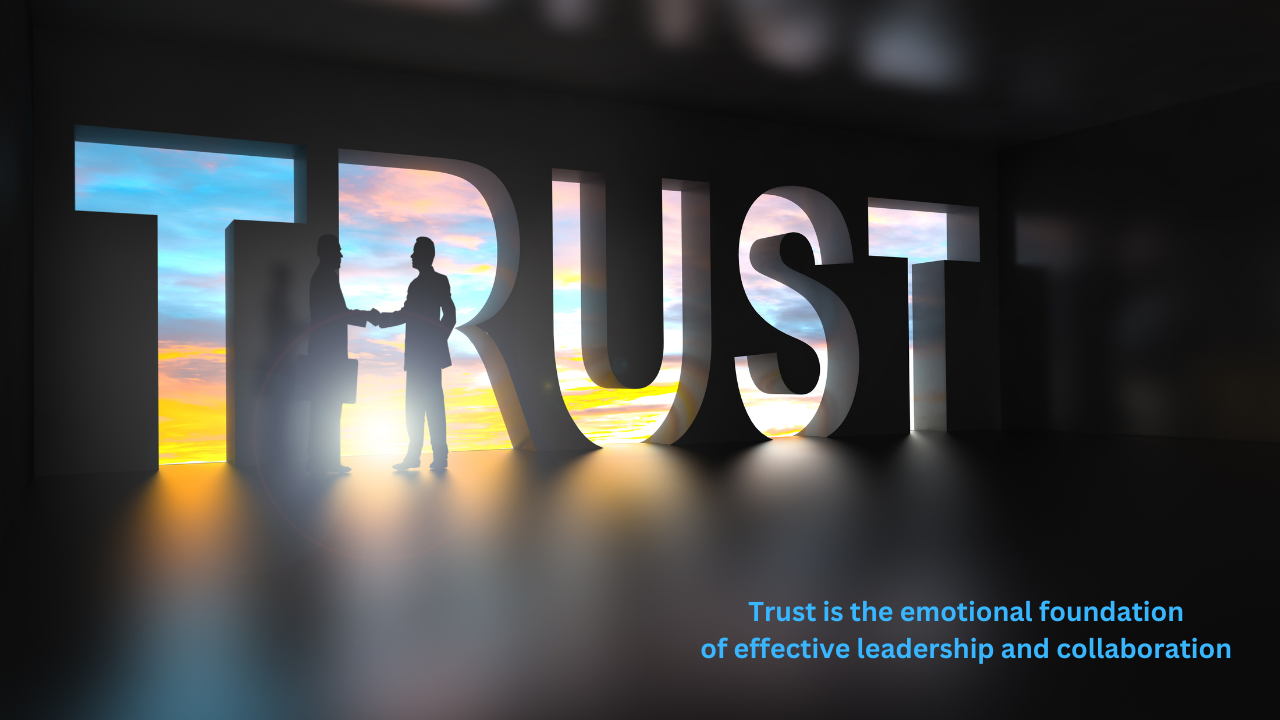
Most owners think of trust as a soft skill. A nice-to-have. The thing you build by being friendly and consistent for long enough. That mental model is not wrong — but it badly underestimates what trust actually is. Trust is not the feeling that follows a healthy business. Trust is the soil in which a healthy business grows. Everything else — strategy, culture, hiring, sales, technology — is a plant that depends on the nutrients in that soil. When trust thins out, nothing on top of it can compensate. You can change the seeds, change the fertilizer, change the gardeners. If the soil is depleted, the plants stay small.
Mira’s leadership team was not lazy. Her senior producer was not disengaged. The soil was thinning, and the plants were adapting the way plants do — by putting fewer roots into less reliable ground. Slower decisions. Smaller bets. Less honest push-back. None of those are character problems. They are root responses to soil that has quietly changed.
What Trust Is Actually Made Of
Two decades of neuroscience research, going back to Paul Zak’s long-running work on oxytocin and organizational trust, have given us something most leaders do not yet have on their dashboards: a concrete picture of what trust is made of, and how it accrues — or leaks — at the level of one nervous system experiencing another. Zak’s research with more than a hundred organizations found that employees in high-trust companies report seventy-four percent less stress, fifty percent higher productivity, seventy-six percent more engagement, and forty percent less burnout than employees in low-trust companies. Same industries. Same talent pools. Same labor markets. The difference is the soil.
Trust, when you take the science apart, is built from four ingredients — and every leader I have ever worked with has unevenly developed strengths across them.
The first ingredient is reliability. The basic, unglamorous discipline of doing what you said you would do, by when you said you would do it, without asking to be reminded. Reliability is the floor of trust. Nothing built on a cracked floor stays standing.
The second ingredient is honesty. Not brutal honesty — accurate honesty. The willingness to say what is true, even when it is uncomfortable, in a way the other person can hear. Honesty without empathy is just bluntness. Empathy without honesty is just niceness. Trust requires both — at the same time.
The third ingredient is competence. People are willing to give their trust to those who can actually do the thing being trusted. Reliability and honesty without competence build affection. Trust requires that the person on the other side of the table can also deliver. Competence is the part that lets the other two compound.
The fourth ingredient — and the one that almost every owner I work with underestimates — is care. Care is not the absence of high standards. Care is the lived signal that the person across from you is treating you as a person rather than a resource. People do not trust those who agree with them. They trust those who they believe genuinely want them to succeed. Care is the ingredient that turns the other three into something that compounds across years instead of resetting every quarter.
Why Trust Leaks Quietly
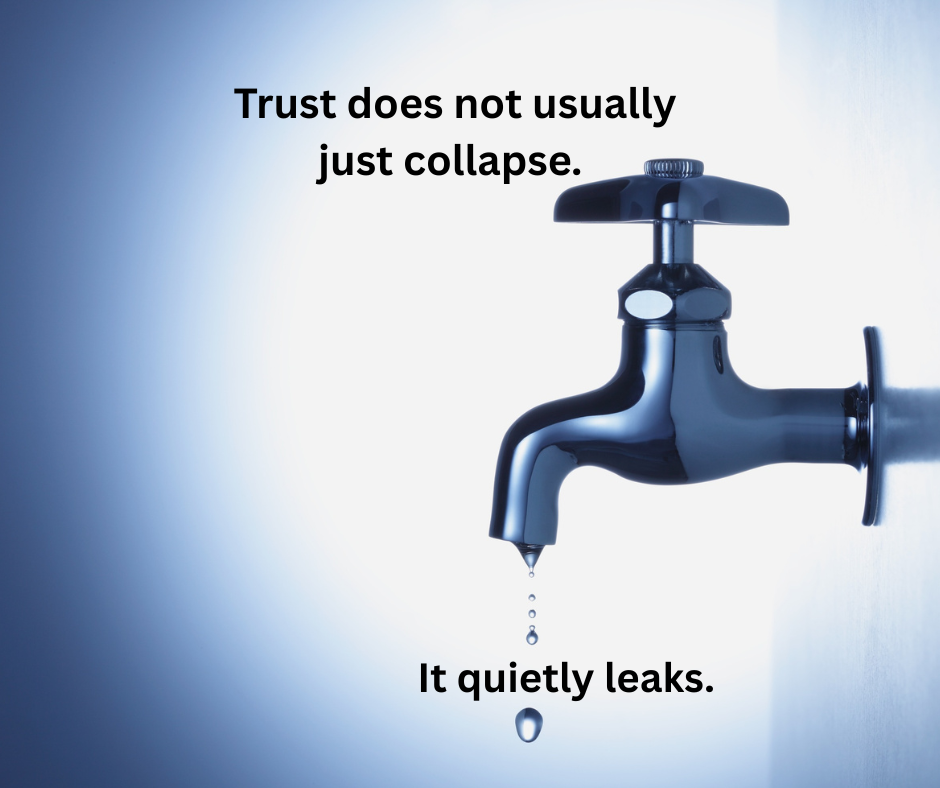
Here is the part Mira did not see coming. Trust does not usually collapse. It leaks. One missed commitment that never quite got addressed. One vague answer in a meeting where a direct one was needed. One promotion that surprised the team because the criteria were never explained. One feedback conversation that got delayed because it felt hard. None of those moments are dramatic. Each one is a small withdrawal from the trust account.
And trust accounts have a property most owners do not realize until they have drained one. The withdrawals are noticed immediately. The deposits take three to five experiences to register. That asymmetry — sometimes called the five-to-one ratio in relational research — means that a leader running a company on autopilot is almost certainly running a slow net withdrawal, regardless of how good their intentions are. The soil thins one missed micro-interaction at a time. By the time it shows up in slower decisions and carefully worded silence, the leak has usually been running for a year.
The other thing trust does, quietly, is define your operational ceiling. A high-trust company can run on shorter meetings, fewer approval layers, and faster decisions, because trust functions as compressed bandwidth. A low-trust company protects itself with process — and pays the cost in speed. The same strategy, executed on different soil, produces wildly different results. Most owners blame execution. The execution is downstream of the soil.
Your Assignment This Week
Trust is built — and rebuilt — through small, deliberate practices. None of these require a retreat, a survey, or a team-building exercise. All four will produce useful information inside of seven days. Run any three of the four.
1. The Four-Ingredient Audit. Pick three relationships in your business that matter most this quarter — a key team member, a key client, a key partner. For each one, rate yourself on a ten-point scale across the four ingredients: reliability, honesty, competence, care. Be honest. You are almost certainly strong in two and weaker in two. The weaker two are not character flaws — they are the precise places your soil is thinning with this person. That is where the next deposit needs to go.
2. The Smallest Reliability Rep. Find one small commitment you made in the last thirty days that has been quietly slipping. Not a strategy. A small one. The reply you were going to send. The acknowledgment you said you would make. The fifteen minutes you promised someone. Close it this week. Reliability is built by small reps compounded over months — and the smallest unclosed loops are where the leaks almost always start.
3. The Honest-and-Caring Sentence. Identify one conversation you have been delaying because it required both honesty and care at the same time. Write down, in one sentence, what you actually need to say. Read it twice. Have it this week. Most owners I have watched do this are surprised at two things: how often the sentence was less harsh than they feared, and how much of the soil that one conversation restored.
4. The Care Signal You Have Not Sent. Pick one person in your ecosystem whose recent contribution you have not specifically acknowledged. Not a thanks. A specific care signal: a sentence that tells them you saw what they did, why it mattered, and what it tells you about them. Sixty seconds to write. Three minutes for them to read. The compounding interest on that signal will surprise you.
If you take only one of these four into the week, take the first. The Four-Ingredient Audit gives you something almost no operating dashboard ever will — a map of where the trust soil in your business is rich, where it is thinning, and where the next deposit will pay back the most. The map is uncomfortable to draw. It is also the most useful one you will draw this quarter.
When Mira ran the Four-Ingredient Audit, she found something that genuinely stopped her. Her reliability score with her senior producer was a nine. Her honesty score was a nine. Her competence score was a ten. Her care score had quietly drifted to a five — not because she did not care, but because for eighteen months she had been so focused on the company that she had stopped signaling care in the ways her senior producer needed to feel it. The slower pushback in meetings was not disengagement. It was a root response to thinning soil. One care signal a week — specific, written, unhurried — over the next quarter put more nutrients back in the ground than any strategy meeting could have. By the end of summer, the senior producer was pushing back again. Mira told me, on a follow-up call, that she had never realized how much she had missed it until it came back.
If You Want to Go Deeper
Trust is one of the dimensions of the inner operating system that is hardest to see from the inside, because it shows up most clearly in what other people do — or quietly stop doing — around you. EQFIT® coaching and the Entrepreneurs Edge™ assessment are designed to give you the outside view: where your soil is rich, where it is thinning, and which two of the four ingredients are the highest-leverage places to put your next deposit. If decisions in your business have started to slow down for reasons no one can quite name, the soil is almost always where the answer lives. Learn more at eqfit.org, or simply reply to this post.
Next week we move from the soil itself to the rhythms that keep it healthy — the practical, weekly cadences of communication that either build or quietly starve trust over time. The post is titled “The Communication Rhythms That Keep Teams Aligned.” I will see you there.
Copyright © EQFIT® — Author: Steven Goodner. All rights reserved.